.jpg)
Why Tree Topping Damages Tree Health?
Show More
Written by James M | Writer/Editor, Team Always AddValue

A tree risk assessment isn’t about deciding whether a tree looks good or bad. It’s about answering one question with critical evidence: What is the likelihood that this tree will fail and what happens if it does?
This process is methodical, evidence-driven, and rooted in principles that extend well beyond landscaping.
At its core, tree risk assessment follows the same logic used in engineering, safety management, and disaster planning: identify hazards, evaluate likelihood, and measure consequences.
The general definition of risk assessment involves analyzing potential hazards and the severity of their impact. In the realm of tree care, the hazard is structural failure. The consequence is damage to real individuals or property.
The assessment begins with identifying conditions that could lead to failure. Arborists examine:
The structure of a tree determines how forces, such as wind or gravity, are distributed. Cracks, decay, or imbalance change those forces.
Tree anatomy principles explain how load-bearing tissues support a tree’s weight. Weak structure doesn’t guarantee failure, but it raises probability.
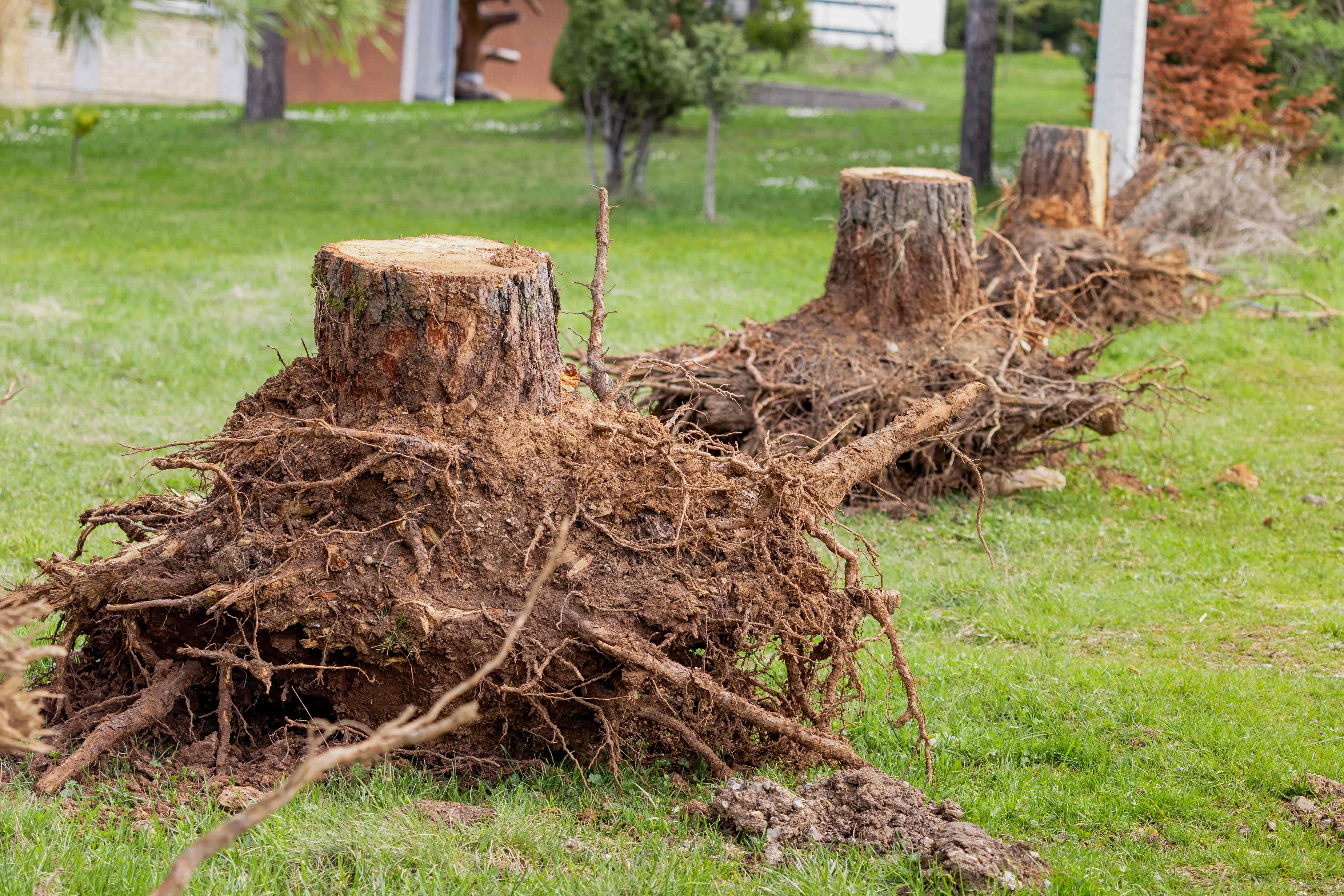
Roots anchor trees against lateral forces. When anchorage is compromised, failure risk increases dramatically.
Assessors look for:
Root systems spread widely and rely on soil stability for support. Root failure is one of the most common causes of sudden tree collapse.
Trees are constantly under load, from their own weight, from wind, and from environmental changes.
Stress factors include:
When stress exceeds tolerance, tree failure becomes more likely.
A tree’s condition alone doesn’t determine risk. Risk exists only when there is something to be damaged.
Targets include:
Tree risk increases when failure intersects with human activity or infrastructure. A compromised tree in an open field poses less risk than a similar tree beside a home.
Assessors don’t predict the future, they estimate the probability of tree failure and fatalities.
This involves weighing:
The principles used mirror those in workplace hazard evaluation. OSHA describes risk as a combination of likelihood and severity. Tree risk assessment applies the same logic to natural structures.
Consequences matter as much as likelihood. A falling limb over a roof has different implications than one over an empty yard.
Disaster risk frameworks emphasize consequence analysis as a core component of risk management. Tree assessments consider both damage potential and human safety.
A risk assessment does not automatically lead to removal. Instead, it identifies options, such as:
Mitigation aims to reduce risk to an acceptable level—not eliminate trees unnecessarily.
Without a framework, tree decisions rely on intuition. With assessment, decisions rely on evidence and intuition.
The discipline of tree risk assessment exists because trees are living structures subject to physics, biology, and environmental forces. Professional evaluation replaces assumptions with structured reasoning.
Risk changes over time. A tree that is acceptable today may not be acceptable after a storm, construction, or soil disturbance.
Risk management models emphasize reassessment as conditions evolve.Tree risk assessment is not a one-time event, but rather an ongoing process.
Tree risk assessment is not about fear or aesthetics. It’s about understanding probability, consequences, and control. By applying structured evaluation methods, professionals identify hazards early, while safe, cost-effective options still exist. That’s the difference between managing risk and reacting to damage.