.jpg)
How Much Does Tree Trimming Cost?
Show More
Written by James M | Writer/Editor, Team Always AddValue

Root damage doesn’t automatically mean a tree must come down. In fact, many root-related issues can be managed for years without removal. The critical question isn’t whether roots are causing problems. It’s when those problems reach a point where keeping the tree creates more risk than value.
That tipping point is where tree removal becomes the responsible option.
Root-related problems typically progress through stages:
Understanding where a situation falls on this spectrum determines the appropriate response.
Urban tree management studies emphasize proportional response rather than immediate removal. Removal is not the first step, but sometimes it is the final one.
Minor cracking in concrete or pavement does not always justify removal. However, progressive damage does.
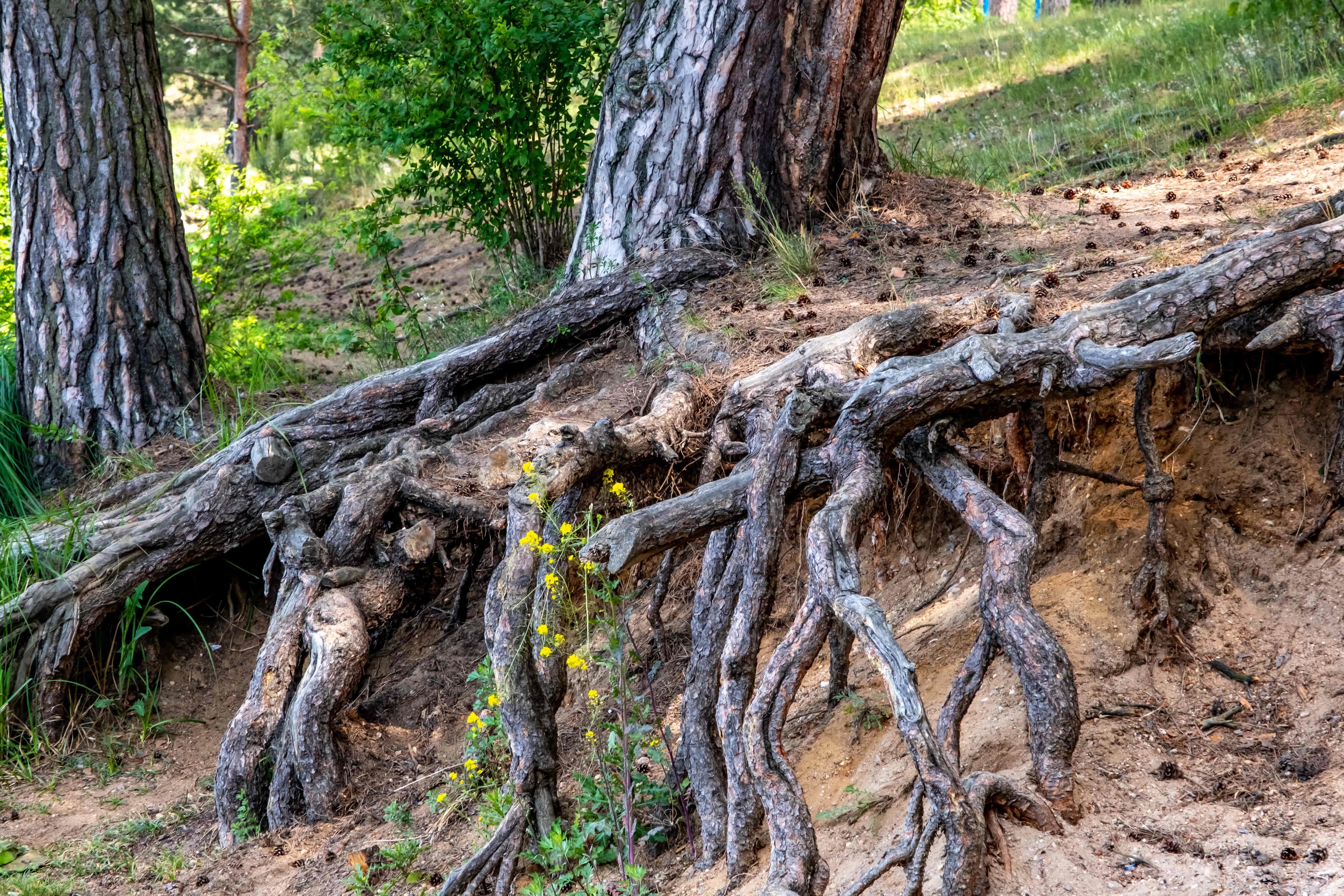
Tree roots can exert steady pressure that widens cracks over time. Small structural defects often worsen once stress pathways are established among tree roots. When damage continues despite repairs, the root system, not the surface, is the underlying issue.
When tree roots affect areas critical to structural integrity, such as foundations, retaining walls, or load-bearing slabs, the risk calculus changes.
Soil movement around foundations can affect stability and drainage patterns. At this stage, root pruning may destabilize the tree, while leaving roots intact continues property damage, creating a no-win scenario.
Occasional sewer root intrusion can sometimes be managed. Repeated intrusion usually cannot.
Infrastructure studies from reliable sources show that roots re-enter pipes once access points exist, even after mechanical clearing. If a tree’s root system repeatedly damages underground utilities, removal often becomes the only long-term solution.
One of the most serious outcomes of root intervention is loss of stability.
If roots have been:
…the tree may no longer be safely anchored. An unstable tree near structures or people is a clear removal candidate.
Root barriers are preventive tools, not cures. When roots have already spread beneath structures, barriers often cannot be installed without significant excavation.
Land-use planning research stresses that mitigation tools are most effective before conflicts arise. Once roots occupy critical zones, removal may be more practical than partial solutions.
Root damage that extends to neighboring properties, shared sidewalks, or public infrastructure can create legal exposure. At this point, removal decisions are often driven as much by liability as by biology.
Root cutting may seem like a compromise, but it can create two new problems:
Arboriculture experts cautions that removing too many structural roots increases failure risk. When root cutting introduces safety hazards, removal becomes the safer choice.
Property owners often hesitate due to removal costs. However, cumulative repair expenses, foundation fixes, sewer repairs, repeated pavement work, often exceed the cost of removal over time. At a certain point, removal is not an expense—it’s cost control.
Tree removal becomes necessary when:
In these cases, preserving the tree no longer preserves value.
Tree roots don’t become a problem overnight, and removal is rarely the first answer. But when damage advances, stability weakens, or liability grows, removal shifts from an option to a responsibility.
Recognizing that threshold early prevents small underground conflicts from becoming large, irreversible property losses.